
Customer retention management: a guide for UAE cafés, salons and restaurants
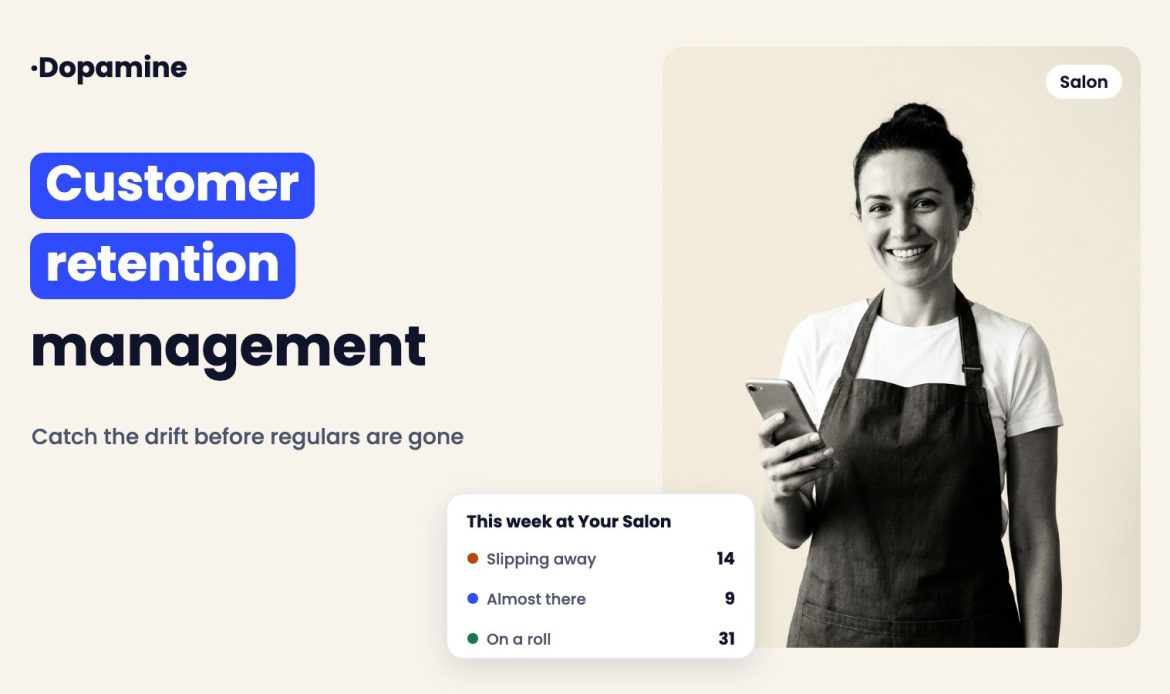
Customers rarely quit. They drift. A regular who came every week starts coming every other week. Then once a month. Then not at all. Nobody complains, nobody leaves a bad review. They just stop showing up, and most owners only notice when the shop feels quieter than it used to.
Customer retention management is how you catch that drift early and do something about it. This guide explains what it means for a café, salon, restaurant or shop in the UAE, the numbers worth tracking, and a simple system you can run without a marketing team.
What is customer retention management?
Customer retention management is the habit of keeping the customers you already have. In practice it means four things: knowing who your customers are, noticing when someone stops coming, reaching out at the right moment, and checking whether it worked.
Big companies do this with large CRM teams. A walk in business needs something much simpler, but the idea is the same. You stop treating every day as a fresh start and start treating your customer list as the most valuable thing you own.
Why retention matters more than new customers
Most marketing budgets go into finding new people: ads, delivery app commissions, influencer posts. Keeping existing customers gets far less attention, even though it pays back more:
- 94% of UAE consumers believe companies should reward loyal customers (KPMG, via Communicate).
- Bain & Company found that a 5% increase in customer retention can lift profits by 25% to 95%.
- Harvard Business Review reported that winning a new customer costs 5 to 25 times more than keeping an existing one.
For a small business the logic is even simpler. A regular already knows where you are, likes what you do and trusts you. Getting them back costs a message. Replacing them costs an ad campaign.
The retention loop: five steps
Good retention management follows the same loop every week.
1. Capture every customer
You cannot keep customers you do not know. The first step is getting a name and number for everyone who visits, with their agreement. A loyalty program does this naturally: customers join to collect rewards, and every visit is recorded. A QR code on the counter that opens WhatsApp is the easiest way to do it, because nobody has to download an app.
2. Know each customer’s rhythm
Every regular has a rhythm. One comes every Saturday morning, another every second Tuesday after work. Once visits are recorded, the rhythm becomes visible. This is the single most useful piece of customer data a walk in business can have.
3. Spot the drift early
When a customer goes quiet for longer than their usual rhythm, that is the moment to act. A weekly customer who has not been in for three weeks is slipping away. A customer who has been gone for months is close to lost. The earlier you notice, the easier it is to bring them back.
4. Act with the right message
Not every customer needs a discount. A regular who is slipping away usually just wants to feel missed, so a short personal note works better than a coupon. A customer who has been gone for months may need a real reason to return. Sending everyone the same offer wastes margin on people who would have come back anyway.
5. Measure what came back
Finally, check the result. How many of the customers you messaged came back, and what did they spend? Keep what works, drop what does not, and repeat the loop next week.
What to send each group
Retention gets much easier when you sort customers into groups and treat each group differently.
| Group | Who they are | What they need | What to send |
|---|---|---|---|
| Your VIPs | Top spenders | Recognition | A personal thank you, first taste of anything new |
| The loyal core | In most weeks | Appreciation | A surprise treat on milestones, otherwise leave them alone |
| New faces | First visit in the last two weeks | A reason to return | A welcome treat a few days later |
| Almost there | One visit from a reward | Encouragement | A progress reminder, no discount needed |
| Slipping away | Regulars quiet for a few weeks | To feel missed | A short personal note from the owner |
| Lost regulars | Regulars quiet for months | A real incentive | A win back offer, then one personal gesture |
Notice that most groups do not get a discount at all. That is how retention protects your margin instead of eating it.
Retention numbers worth tracking
You do not need a dashboard full of charts. Five numbers tell you almost everything:
- Repeat rate: the share of customers who came back at least once. If 100 people visited last month and 35 came back, your repeat rate is 35%.
- Visit frequency: how often a typical customer comes. Rising frequency means your regulars are getting more regular.
- Time between visits: the gap for each customer. This is what tells you someone is drifting.
- Win back rate: of the quiet customers you messaged, how many returned.
- Spend of returning customers: what regulars spend compared with first time visitors.
Check them once a month. If repeat rate and win back rate go up, your retention is working.
What to look for in a customer retention management system
A spreadsheet works for twenty customers. Beyond that, you need a system. Look for these:
- Easy capture at the counter. No app for customers, two fields for staff.
- Automatic customer groups. New faces, regulars and customers slipping away, sorted for you.
- Drift detection. The system should learn each customer’s rhythm and flag them when they go quiet.
- Messages on a channel people read. In the UAE that usually means WhatsApp, not email.
- Win back on autopilot. Quiet regulars get a message without you having to remember.
- Clear reporting. Repeat rate, win backs and spend, in plain numbers.
- Your data stays yours. You should own the customer list, not a platform.
For a deeper look at the tools, read our guide to loyalty program software in the UAE.
Common retention mistakes
- Blasting the same discount to everyone. It trains customers to wait for offers and costs margin on people who were coming anyway.
- Waiting too long. A customer gone for a month is easy to win back. A customer gone for six months has probably found somewhere else.
- Relying on social media. An Instagram post reaches a fraction of your followers and none of the customers who never followed you.
- Not owning the data. Customers who come through delivery apps belong to the app. Build your own list.
- Forgetting the regulars who are happy. Your best customers want recognition, not coupons. A thank you keeps them loyal for longer.
How to start in 30 days
- Week 1: set up a simple loyalty reward and a QR code on the counter. Ask every customer to join.
- Week 2: keep capturing. Make sure staff ask at every payment.
- Week 3: look at your groups. Who are your regulars, who are your new faces?
- Week 4: send your first messages: a welcome treat to new faces and a personal note to anyone slipping away. Check who came back.
Dopamine runs this whole loop on WhatsApp: customers join by scanning a QR code, visits and spend are recorded automatically, customers are grouped for you, and quiet regulars get a win back message on Autopilot. It is free to start for one location. See the plans and pricing, or read how a WhatsApp loyalty program works.
Frequently asked questions
What is customer retention management?
It is the practice of keeping the customers you already have: knowing who they are, spotting when they stop coming, reaching out at the right time and measuring who comes back.
What is the difference between a CRM and customer retention management?
A CRM is a tool that stores customer details. Retention management is what you do with them: grouping customers, spotting drift and sending the right message to bring them back.
How do I know a regular customer is slipping away?
Compare how long it has been since their last visit with how often they usually come. A weekly customer who has not been in for three weeks is slipping away.
What is a good repeat rate for a café or salon?
It varies by business, so the most useful benchmark is your own number over time. Track it monthly and aim for it to rise.
Do I need a big budget for customer retention?
No. Retention usually costs far less than finding new customers. A simple loyalty program and a few well timed messages are enough to start.