
What Is Customer Data? Types, Examples and How Small Businesses Collect It
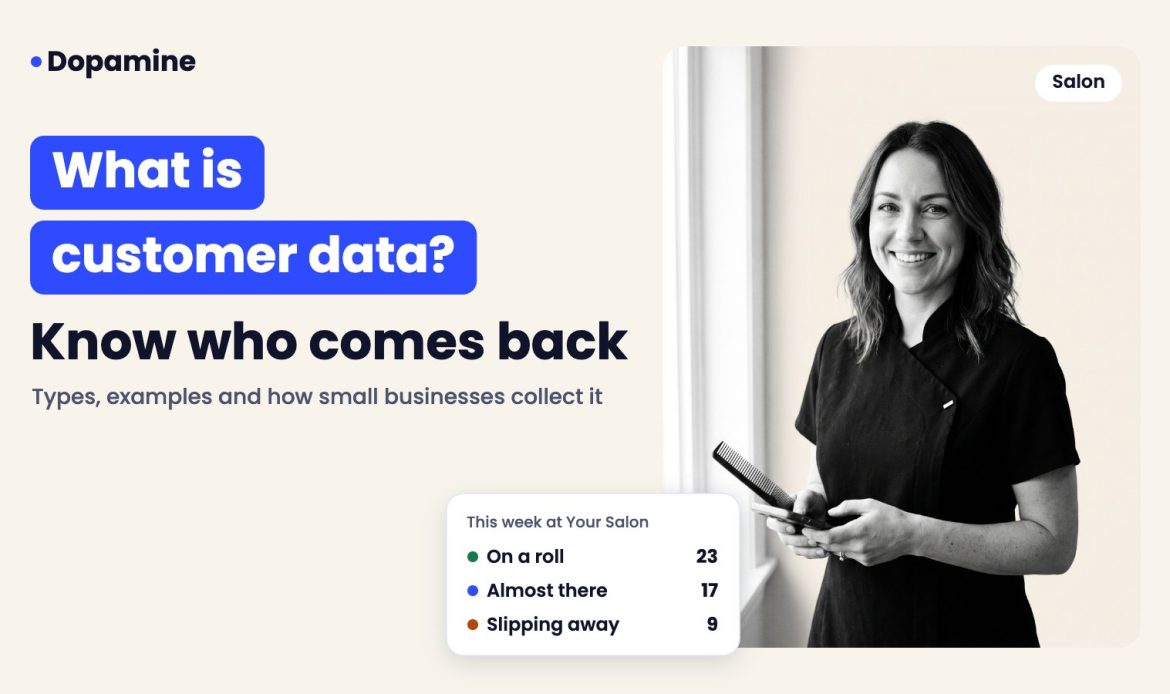
Short answer: customer data is what you know about the people who buy from you: who came, when, what they bought, how much they spent and how often they come back. Collect it and you can see new, returning and lost customers, catch regulars slipping away and thank your best customers. Dopamine collects it on WhatsApp, free.
What does customer data mean?
Customer data is every useful fact about the people who buy from you. For a café, salon, restaurant or shop it is simple:
- Who came, and when they came
- What they came for, and what they bought
- How much they spent
- How often they come back
- Their birthday and their favourite item
Without it you are guessing. With it you know.
What are examples of customer data?
| Data | At a café | At a salon |
|---|---|---|
| Who | Mariam, joined at the counter | Sarah, joined after her first cut |
| When | Every weekday around 8 am | Every third Saturday |
| What they bought | Flat white and a croissant | Cut and blow dry |
| Spend | AED 32 a visit | AED 180 a visit |
| Birthday | 14 March | 2 June |
| Favourite | Date latte | Same stylist every time |
What are the four types of customer data?
- Identity data: name, WhatsApp number, birthday. Who the customer is.
- Behaviour data: visits, dates, what they bought, spend. What the customer does.
- Preference data: favourite drink, usual treatment, usual day. What the customer likes.
- Feedback data: ratings and comments after a visit. How the customer feels.
A small business needs nothing more. You do not need addresses, ID numbers or anything sensitive to run a good loyalty program.
Why should a café, salon or shop collect customer data?
To understand your customers better. Your till tells you what sold today. It does not tell you that Sarah, who came every Tuesday for a year, has not been in for five weeks. Customer data does.
How does customer data help your business?
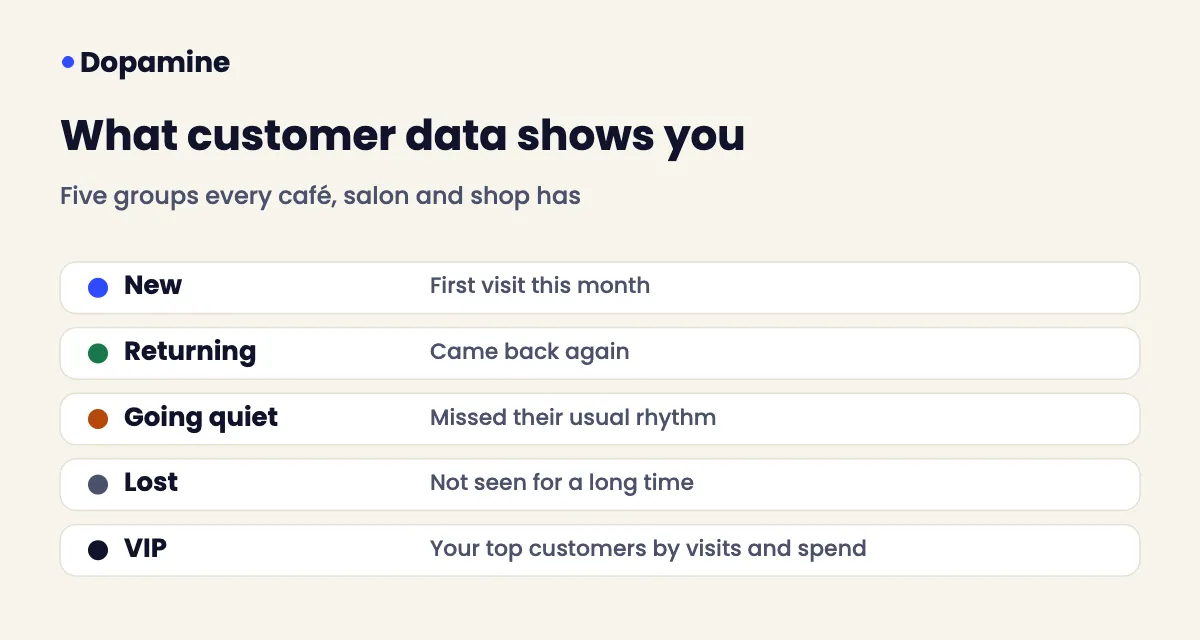
- See the leak. Count how many new customers came in this month, how many came back and how many disappeared. That shows where customers leak away, so you can stop it. You never see this without data.
- Know your regulars, and when they slip. Every regular has a rhythm. When Omar misses his usual Friday twice, you know before he is gone, not after.
- Find your VIPs and thank them. Know your top customers by visits and spend, and reward them when they hit a milestone, like a 25th visit. How many brands actually thank their VIP customers? Very few. That is your chance.
- Gift their favourite on their birthday. A free date latte for Mariam in her birthday week means more than a coupon sent to everyone.
How do businesses get customer data?
| Method | What you get | Weak spot |
|---|---|---|
| Paper stamp card | Visits, on the card | No name or number; gone when the card is lost |
| POS customer profiles | Purchases, if staff type a number | Skipped in a busy queue |
| Booking system | Appointments | Misses walk ins and retail sales |
| Delivery apps | Orders on the app | Platforms do not share customer contact details |
| WhatsApp loyalty (Dopamine) | Name, number, visits, spend, birthday, feedback | Customer scans once to join |
How Dopamine collects customer data
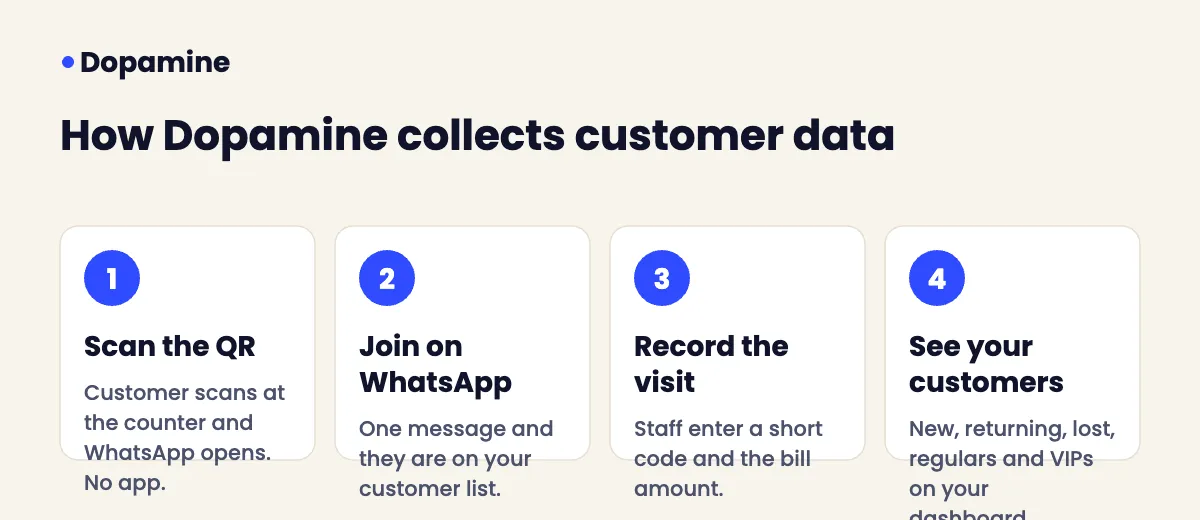
- The customer scans a QR code at the counter. WhatsApp opens, they send one message and they have joined. No app to download.
- At each visit, staff enter the customer’s short code and the bill amount. The visit and spend are recorded, and stamps, points or cashback are added.
- Your dashboard shows new, returning and lost customers, visits, spend and repeat rate.
- On paid plans, smart groups (top customers, regulars, going quiet, lost) update by themselves, Autopilot sends a personal win back message when a regular goes quiet, and milestone and birthday rewards go out automatically.
You own your customer list. Only message customers who joined and agreed to hear from you, in line with the UAE Personal Data Protection Law.
What it costs
Dopamine is free on the Ignite plan, with 10 WhatsApp message credits to start. More credits cost AED 175 per 500. Paid plans add Autopilot win back, smart groups, feedback and Google reviews. See pricing or see how Dopamine works.
Related guides
- Customer retention management: keep the customers you already have
- WhatsApp marketing messages that bring customers back
- Digital stamp card with no app
- WhatsApp marketing for restaurants
Frequently asked questions
What customer data should a small business collect?
Name, WhatsApp number, visit dates, what they bought, how much they spent, their birthday and their favourite item. That is enough to spot regulars, lost customers and VIPs.
Is it legal to collect customer data in the UAE?
Yes, with the customer’s agreement and a clear purpose, as the UAE Personal Data Protection Law (Federal Decree Law No. 45 of 2021) sets out. Businesses in DIFC and ADGM follow their own data protection rules. With Dopamine, customers join themselves on WhatsApp, and you only message people who joined. This is general information, not legal advice.
Do customers need to download an app?
No. They scan a QR code at the counter and join on WhatsApp.
How is customer data different from a POS report?
A POS report shows what sold. Customer data shows who bought it, how often they come back and who stopped coming.
What can I do with customer data on day one?
See who joined, thank first time visitors and start counting visits toward a reward. After a few weeks you can see who returned and who did not.